

Today, quality of living is determined by the possibilities for use
Previously, one thing was paramount: more square meters meant more value. But rising real estate prices and changing lifestyles are fundamentally altering the expectations of many prospective buyers.
Why square meters alone are no longer convincing
Use of space counts more than size
Especially in cities or with rising property prices, prospective tenants & buyers are now much more concerned with how efficiently an apartment can actually be used.
A large room is of little use if it feels impractical in everyday life. At the same time, a smaller apartment can be significantly more appealing with a well-designed floor plan.
Within just a few seconds, prospective tenants often decide:
- Does this apartment suit my lifestyle?
- Can I work here?
- Is there enough storage space?
- Can children’s rooms be set up effectively?
- How flexible are the rooms?

Different life situations change the requirements
Every prospective buyer thinks about spaces individually
Today’s housing needs are far more individualized than in the past.
People no longer just look at properties superficially, but think directly about how they would personally use the spaces.
Typical examples:
- Remote workers consider how to integrate a workspace.
- Families plan children’s rooms more flexibly.
- Collectors need display and storage space.
- Couples think long-term about family planning.
- Working professionals desire multifunctional spaces.
As a result, the floor plan is often more important than the total living area.

Why visualization is crucial today
Prospective customers want to recognize opportunities
Many prospective buyers struggle to visualize room layouts immediately.
That’s why modern visualizations help make potential uses emotionally and realistically tangible.
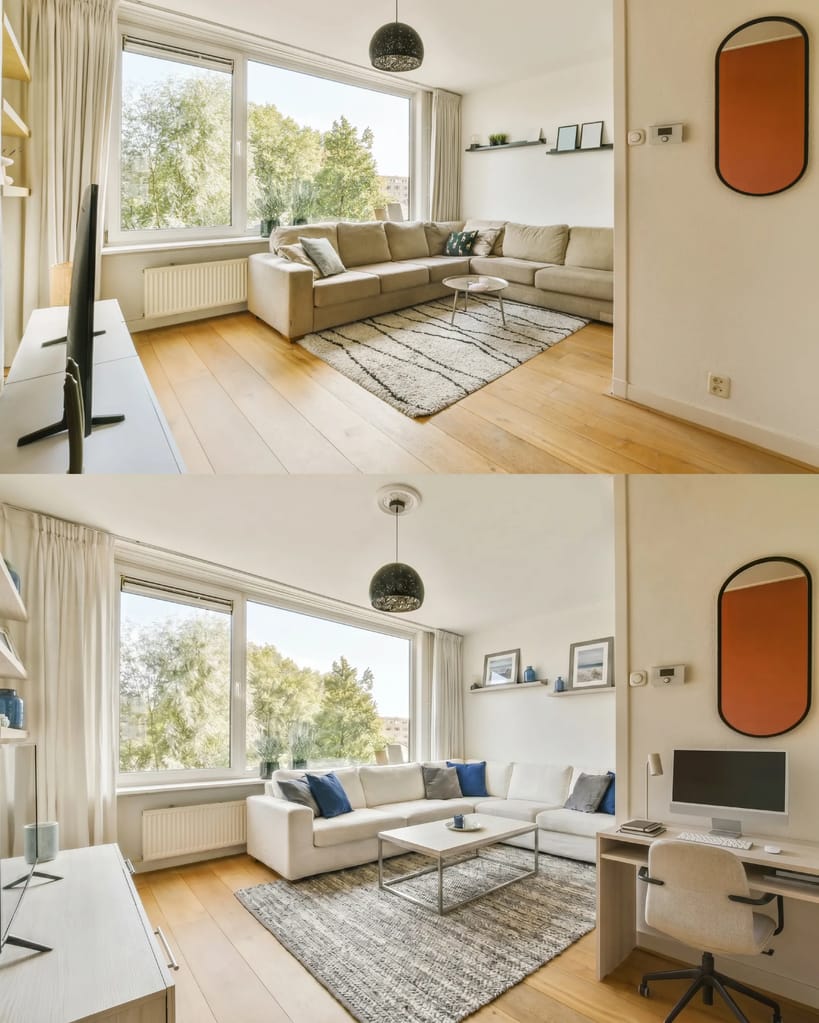
AI renderings provide initial inspiration and show how rooms could be used in a modern way.
In this way, an empty or poorly furnished room can suddenly become:
- Home office
- Family area
- Multifunctional living space
- Storage concept
- Modern living space
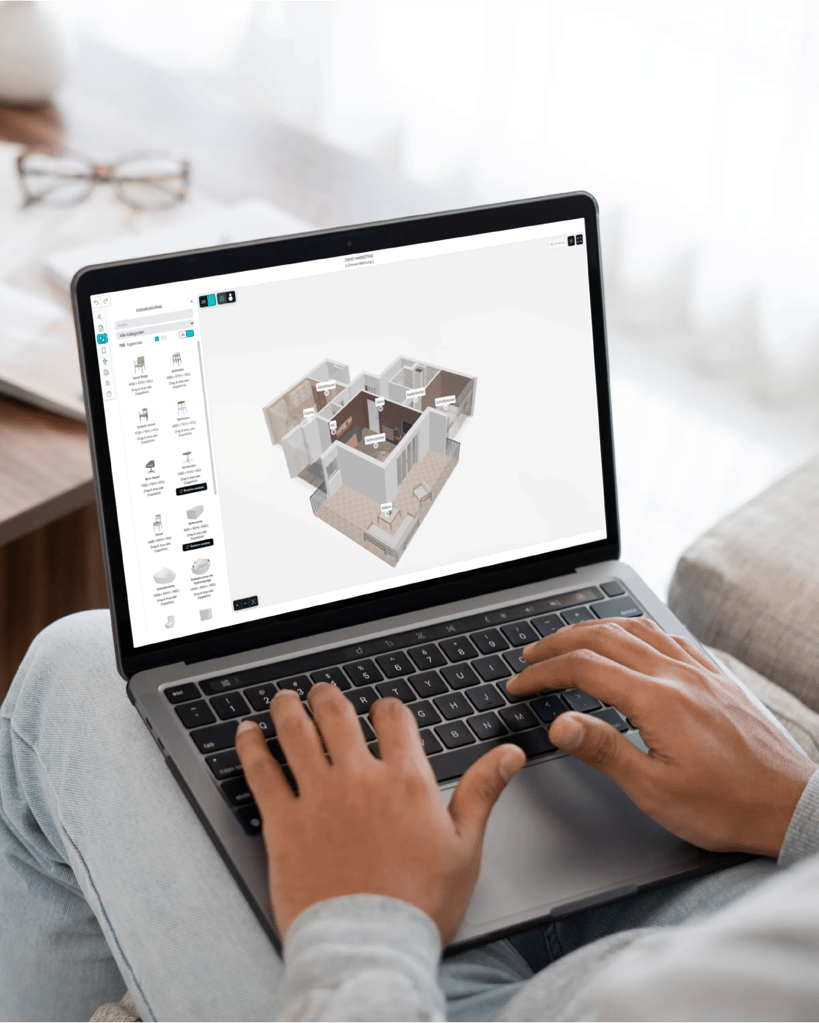
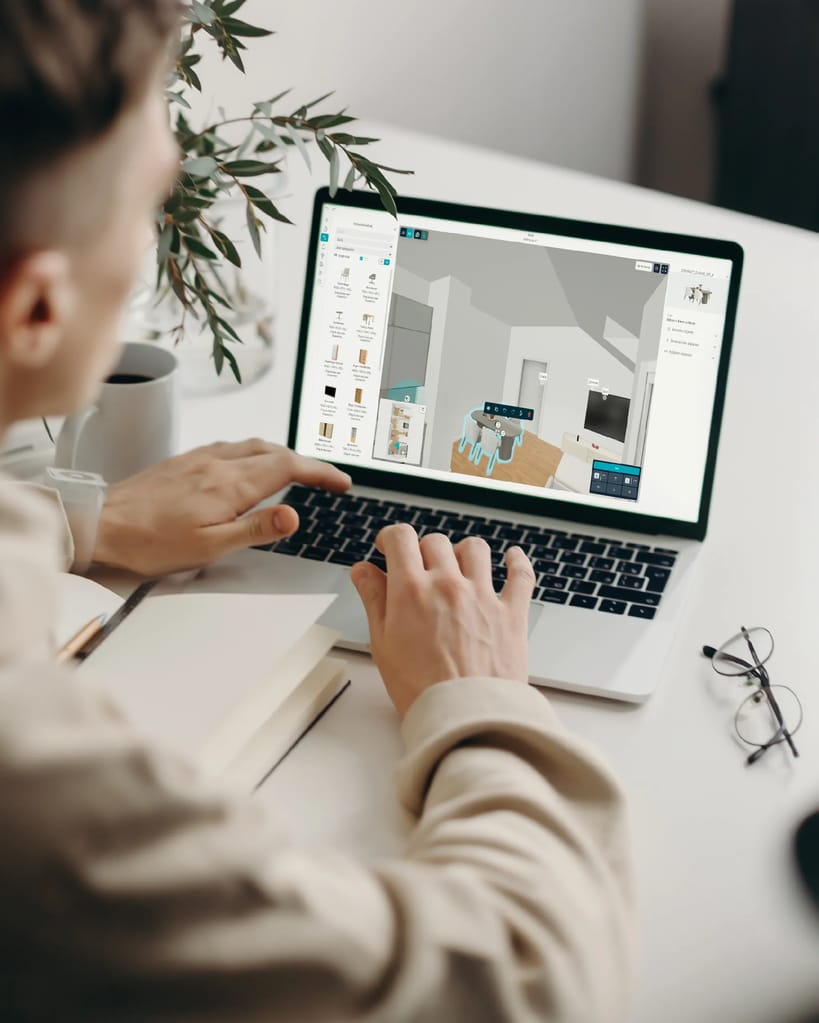
But with digital twins, this goes a step further: As a real estate agent, you give prospective buyers the reins and let them create their own personal living dreams. Based on the 3D model, they can decide whether to rearrange existing furniture or replace it with other pieces – entirely according to individual needs. Your AI renderings thus become initial usage suggestions during the initial consideration phase, while the freely configurable digital twin is the icing on the cake, convincing potential buyers of the property’s existing living space.
Our conclusion
The floor plan determines the living experience
Today, the question is often no longer how big an apartment is – but how well it fits the lifestyle of potential buyers.
Therefore, anyone who wants to market real estate successfully should not only show square footage, but also make possible uses visible, for example through our AI renderings and digital twins as configurators, even for existing properties.
Did you enjoy this article?
Then you’ll find more marketing tips here

(Part 2) EU AI Act in real estate marketing: What real estate agents and developers need to know about AI content
Artificial intelligence (AI) is no longer just supporting real estate companies with image rendering. Social media posts, property descriptions, videos, and automated marketing workflows are now also created with AI support. But what rules apply to this content? Do AI-generated reels need to be labeled? Who is responsible for automatically generated texts? And how can AI visualizations be used transparently and professionally? This article explains what real estate agents and developers should consider when practically applying the EU AI Act and how to safely integrate AI into their daily marketing.

(Part 1) EU AI Act in real estate marketing: What real estate agents and developers need to know about AI content
The EU AI Act introduces new requirements for the use of artificial intelligence in real estate marketing. Learn when AI-generated images should be labeled, what rules apply to social media, and how real estate agents and developers can use AI professionally.

Location Exposé and Digital Twin: Why real estate needs to be experienced inside and out
Digital real estate marketing doesn’t stop at the front door. Why modern property presentations need to make both the surroundings and the property itself tangible and interactive.

Google shows properties. REALITIQ lets potential buyers live in them
Google is testing new real estate listings and integrating property offers directly into search results. What does this mean for real estate agents, developers, and property portals – and why are digital twins and interactive property brochures becoming more important than ever?
Why the floor plan is more important today than the pure living area
Large living spaces are becoming less important. Instead, prospective buyers today primarily decide based on how flexible and practical a floor plan is. Especially in times of high real estate prices, the intelligent use of space is becoming the decisive factor.